Suburban rodent mechanical exclusion in Blacklick serves residential properties where rodents exploit gaps along wood framing, weep holes, and plumbing penetrations. In communities like Woods at Jefferson and Havens…
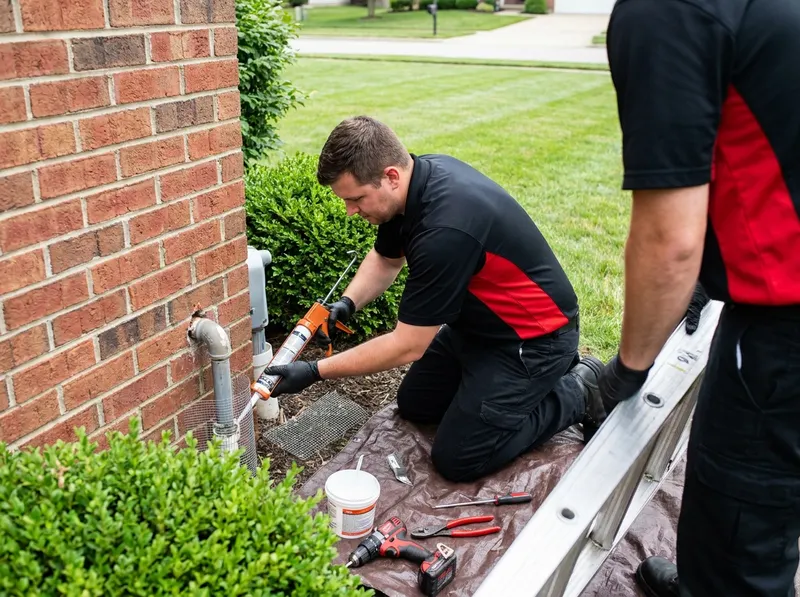
Suburban rodent mechanical exclusion in Blacklick serves residential properties where rodents exploit gaps along wood framing, weep holes, and plumbing penetrations. In communities like Woods at Jefferson and Havens Corners, field mice (Mus musculus) and Norway rats (Rattus norvegicus) transition from agricultural buffers and creek beds into conditioned crawl spaces, conditioned basements, and attics during late autumn temperatures drops. According to structural guidelines published by the Centers for Disease Control and Prevention, eliminating exterior openings larger than 0.25 inches remains the foundational requirement for long-term rodent control. Standard chemical bait stations thin active colonies, yet poison placement fails to eliminate architectural vulnerabilities; mechanical exclusion delivers a permanent barrier that isolates the living envelope without dispersing toxic baits inside structural walls.
The process follows a systematic structural protocol across residential exteriors:
In established subdivisions such as Blacklick Ridge, Broadview Heights, and Pinecrest, modern construction incorporates vinyl or fiber-cement siding meeting concrete block foundations. The critical vulnerability occurs at corner posts and bottom J-channels, where soft expanding foam degrades after UV exposure. Field recommendations from the Environmental Protection Agency emphasize integrated pest management principles prioritizing structural sanitation over recurring toxic chemicals. The standard trade-off between exterior trapping and structural exclusion centers on initial investment versus ongoing recurrence: perimeter trapping requires bi-monthly visits to replenish baits, whereas physical architectural defense permanently locks rodents out of wall cavities and ductwork.
Properties bordering natural corridors like the Blacklick Woods Metro Park, Turnberry Golf Course, or the Blacklick Creek Greenway Trail encounter elevated rodent pressure due to continuous stream ecosystems. Homeowners in Jefferson Run, Sable Ridge, and Farms at Jefferson frequently notice gnaw marks around garage door weatherstripping, HVAC chases, and crawl space access doors. ZephyrCrest Insect Protection utilizes heavy-gauge steel materials complying with ASTM International hardware standards and building envelope moisture guidelines outlined by the U.S. Department of Energy. Sealing crawl spaces also adheres to standards established by the International Code Council to preserve adequate foundation ventilation while shutting out pests. The Ohio Department of Agriculture regulates pest management practices throughout the state, supporting mechanical exclusion as an effective structural solution. In Franklin County, local health regulations governed by Franklin County Public Health recommend structural pest exclusion to mitigate rodent-borne pathogens. Homeowners seeking guidance on rodent exclusion and structural building integrity can also consult the Ohio State University Extension for regional pest biology and defense insights. Exterior mechanical work is scheduled Monday through Saturday, with exact evaluations confirmed on-site before physical installations begin. Direct inquiries can be made by calling (380) 255-6032.
Every job gets a firm, written price after an on-site visit.
Tell us about your suburban rodent mechanical exclusion job in Blacklick and we'll send a clear, written quote, usually the same day.
 ZephyrCrest Insect Protection