ZephyrCrest Insect Protection delivers direct pest control service in Blacklick designed for regional single-family architecture, finished basements, and moisture-rich suburban lots. We establish calibrated exterior perimeters and targeted mechanical barriers that eliminate indoor pest pressure while protecting family living spaces.

Pest control service in Blacklick is an exterior-focused biological and mechanical management protocol that halts insect and rodent entry into suburban structures without relying on unnecessary whole-house chemical saturated sprays.
Every service reflects the same meticulous attention to detail, whether it's a single job or a larger pest control sevice project across Blacklick.
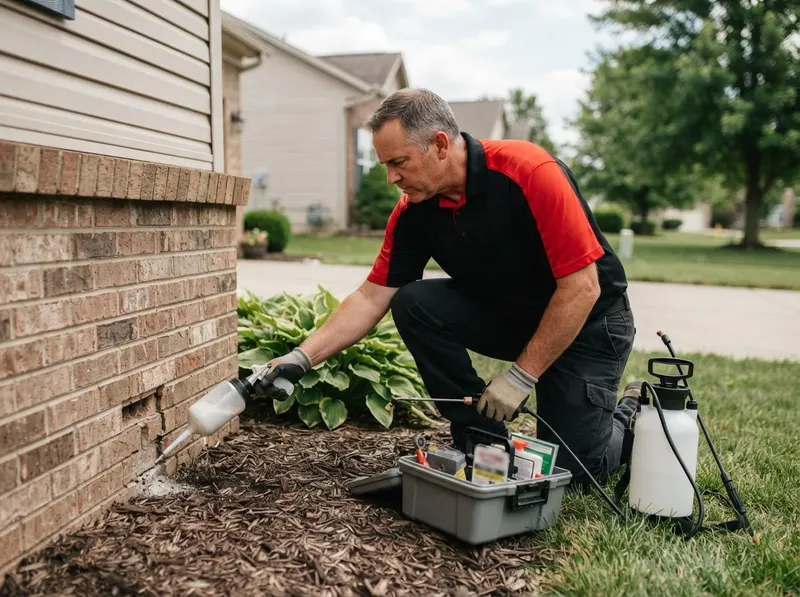
Odorous house ants, pavement ants, and carpenter ants exploit structural expansion joints and masonry weep holes across Blacklick subdivisions. Treatment applies non-repellent micro-encapsulated formulations conforming to EPA Integrated Pest Management benchmarks, allowing worker ants to transfer active ingredients deep into subterranean satellite queens without indoor broadcast spraying. In central Ohio's humid summers, carpenter ants hollow out moist wood framing near exterior window ledges and roof valleys, while sugar-seeking odorous house ants forage through kitchen utility cutouts. Technicians map foraging trails back to landscape boundaries, applying localized botanical granules along mulch edges and foundation perimeters. By systematically rotating biochemical modes of action, our protocols eliminate colony nesting networks beneath driveways and foundation slabs, preventing seasonal indoor reinvasions throughout the year.
Get a quote →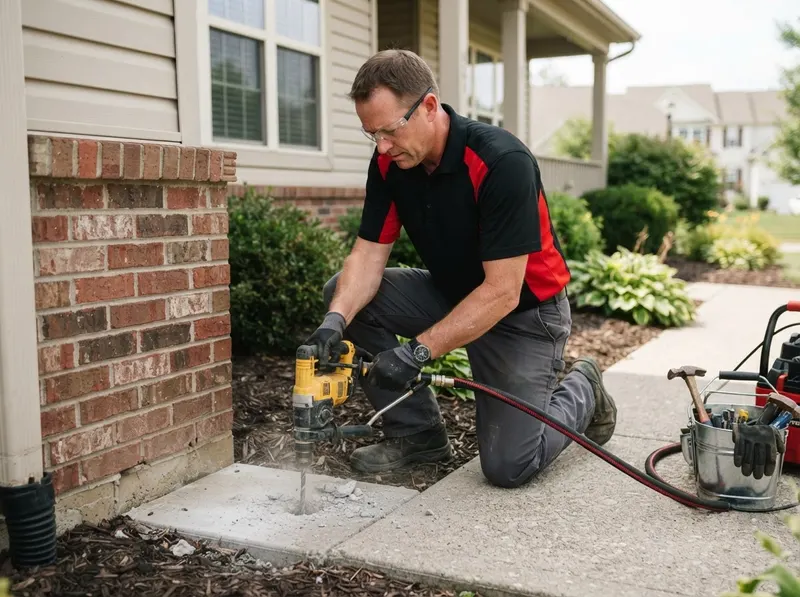
Eastern subterranean termites navigate clay-rich soils toward structural sill plates and exterior band joists in suburban homes. We deploy continuous liquid perimeter barriers and non-invasive monitoring stations meeting Ohio Department of Agriculture pesticide regulations to interrupt molting cycles and neutralize colonies beneath foundations. Subterranean termites construct earthen mud shelter tubes over poured concrete foundation walls to reach cellulose framing timbers. Our application process introduces undetectable liquid termiticides directly into soil trenches along structural footings at labeled dilution ratios. Foraging worker termites unknowingly pass through the treated zone, spreading chitin synthesis inhibitors throughout the entire subterranean nest structure. Routine seasonal inspection verifies bait matrix consumption and confirms structural preservation without disturbing finished basement interiors.
Get a quote →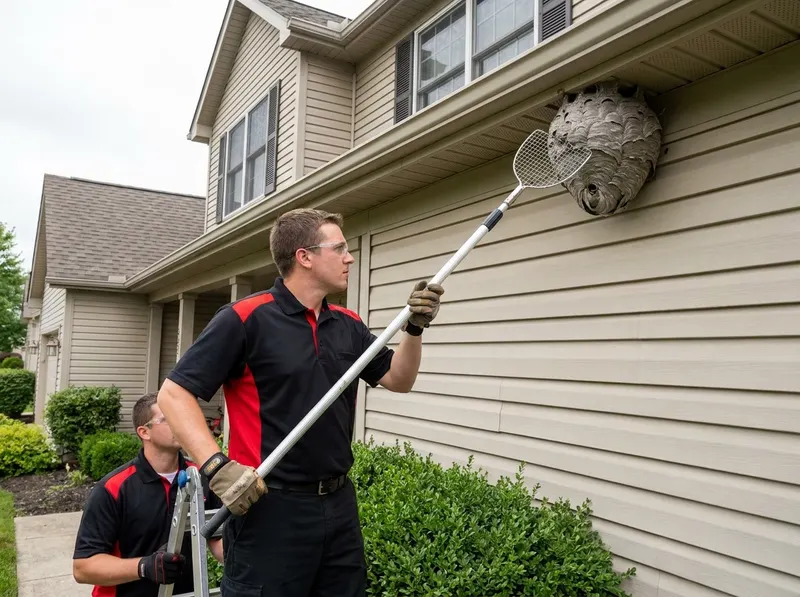
Paper wasps, bald-faced hornets, and ground-nesting yellowjackets colonize soffits, fascia boards, and residential landscape beds from June through September. We execute precision aerosol freeze-knockdowns and complete physical nest removals using telescoping equipment following NIOSH outdoor stinging insect safety guidelines . Aerial yellowjackets frequently build concealed nests inside structural weep holes, exterior vinyl corner posts, and attic gable vents, creating severe sting hazards for residents. Technicians apply targeted micro-dust formulations directly into void entrances, knocking down defensive foraging insects instantly before physically detaching the carton structure. Residual repellents applied to nesting brackets discourage returning fertile queens from establishing secondary nests under porch eaves, roof overhangs, and deck railings for the remainder of the warm season.
Get a quote →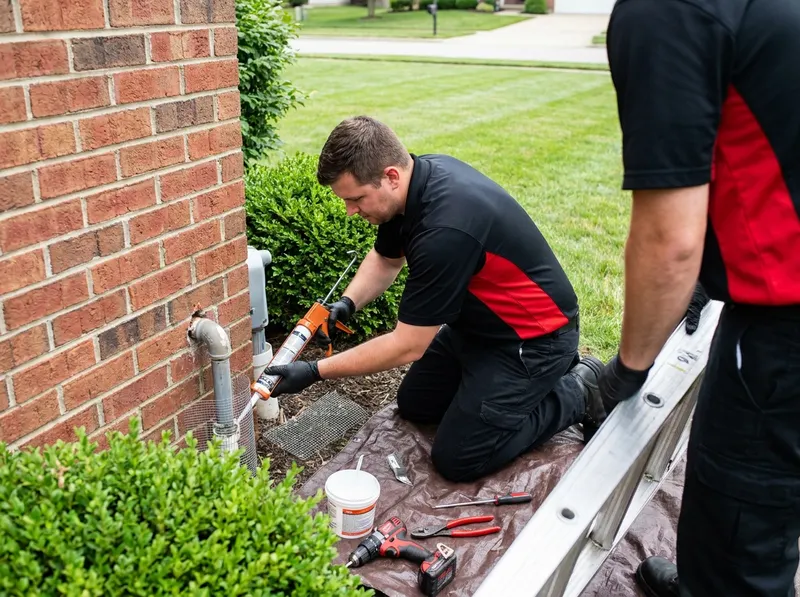
Field mice and Norway rats seek interior warmth when temperatures decline across central Ohio. We install heavy-gauge 1/4-inch galvanized hardware cloth over exterior utility entries, crawl space vents, and garage door thresholds in accordance with CDC structural rodent exclusion standards . Rodents take advantage of foundation gaps as narrow as 1/4 inch around air conditioning refrigerant conduits, gas meter lines, and exterior basement doorways. Our technicians execute thorough foundation inspections, sealing masonry voids with copper mesh and elastomeric polyurethane sealants that mice cannot gnaw through. Interior monitoring includes tamper-resistant snap-trap stations placed in unfinished basements, mechanical rooms, and attics to eliminate trapped rodents humanely without relying on loose secondary-poison rodenticide baits.
Get a quote →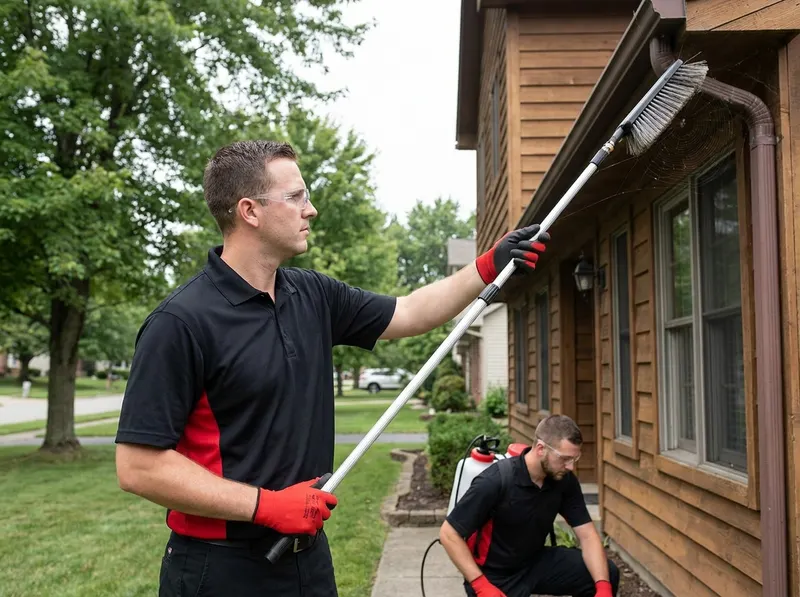
Wolf spiders, cellar spiders, and yellow sac spiders populate exterior eaves, downspouts, and basement sill corners in response to insect prey density. Technicians mechanically sweep webs up to 24 feet using poly-fiber static brushes and apply targeted micro-crystal pyrethroid barriers along foundation perimeters to eliminate baseline food supplies. When midsummer insect populations peak near exterior security lighting, arachnids build extensive webbing across siding, soffit vents, and patio enclosures. Clearing these webs disrupts egg-sac development and eliminates structural anchorage points. Ground-level applications target subterranean foundation fissures, window wells, and landscape borders, forming a durable repellent perimeter that forces predatory hunting spiders away from doorways and crawl spaces into open yard ecosystems.
Get a quote →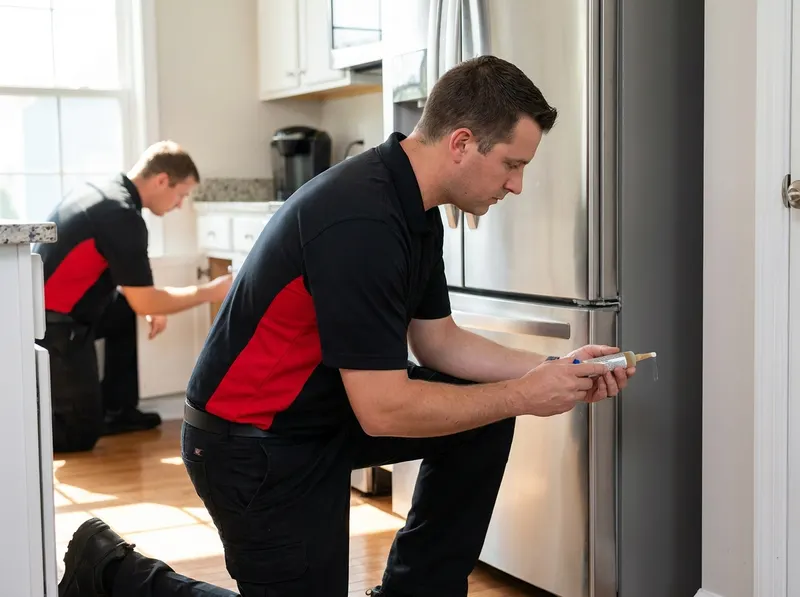
Severe kitchen infestations require precision crack-and-crevice treatments utilizing Insect Growth Regulators (IGRs) and synthetic bait matrices. This methodical approach adheres to HUD Healthy Homes IPM standards to arrest reproductive cycles without contaminating food preparation surfaces. German cockroaches hide within appliance motor housings, cabinet hinge pockets, and hollow drywall voids adjacent to moisture sources. Rather than applying repelling aerosol sprays that scatter insects deeper into walls, we place micro-dots of palatable bait gel inside structural seams. Adult roaches ingest the active matrix and transfer the active ingredient through feces and carcass feeding, triggering complete population collapse within 14 to 28 days while IGR compounds prevent nymphs from maturing into reproductive adults.
Get a quote →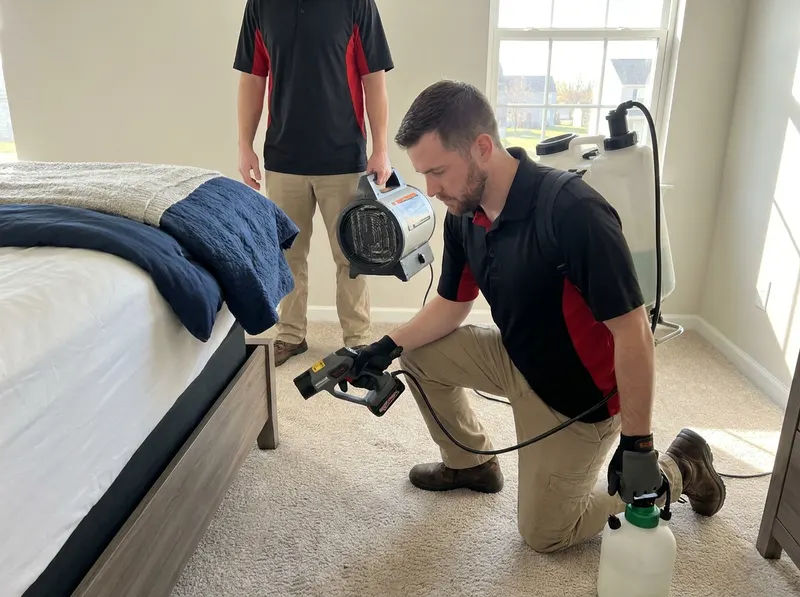
Cimex lectularius hides within mattress seams, headboards, and electrical outlet faceplates. We deploy combined high-temperature localized steam protocols and residual dusts inside structural voids under EPA bed bug remediation protocols , restoring sleep environments without leaving hazardous residues. Bed bugs demonstrate notable resistance to common pyrethroid sprays, requiring a physical and chemical dual-stage protocol. Our application uses dry vapor steam heated above 180 degrees Fahrenheit applied along box springs, frame joints, and baseboard crevices to destroy both active adults and viable eggs on contact. We follow this thermal knockdown with desiccant amorphous silica dust inside wall plates and furniture voids, providing long-term structural barriers that desiccate bed bugs for several months.
Get a quote →Phorid and drain flies breed within plumbing traps and organic matter accumulations beneath kitchen drains. We apply biological enzymatic foam cleaners that digest the gelatinous organic film inside pipes, eliminating the breeding substrate according to NSF sanitation guidelines . In residential sinks, floor drains, and sump pump pits, decomposing organic slime supports fly larval development. Technicians utilize compressed air foamer systems to expand bio-enzymatic cultures throughout the full diameter of drain lines. These active microbes consume organic waste, grease, and hair accumulations without corroding metal or PVC pipes. Removing this breeding medium breaks the fly reproductive life cycle within 5 to 7 days, eliminating indoor swarms without discharging harsh airborne chemical insecticides.
Get a quote →You get a firm, itemized quote for your pest control sevice before any work begins, no surprises, no pressure.
Careful prep, tidy work, and a full cleanup when we are done. We treat your home and belongings like our own.
The same trusted, background-checked team from the first call to the final check.
Selecting appropriate domestic pest defense in Blacklick depends on the target insect biology, structural construction type, and seasonal vulnerability. If a home exhibits an active interior intrusion of foraging odorous house ants or German cockroaches, choose targeted gel baiting combined with an exterior liquid barrier; this combination leverages insect grooming and trophallaxis to collapse colonies without dispersing contaminants across kitchen countertops. If the property faces seasonal structural threats like subterranean termites or wood-boring carpenter ants along slab transitions, choose a continuous subterranean non-repellent liquid termiticide treatment or targeted exterior wall injection.
If the primary challenge involves fall rodent infiltration into attics or drop ceilings, select multi-point structural exclusion involving galvanized wire mesh sealing and crawl space isolation rather than relying solely on interior rodenticide stations. The primary trade-off balances initial treatment scope against long-term maintenance frequency: reactive interior-only treatments offer temporary symptomatic relief but fail to interrupt reproductive cycles, whereas multi-barrier exterior exclusion requires regular seasonal maintenance intervals but maintains an insect-free domestic footprint year-round. Homeowners managing modern transitional slab homes along Havens Corners Road often find that perimeter liquid barriers paired with exterior granule bands offer the cleanest long-term control profile, whereas older residential structures featuring split-level foundations or crawl space voids near the Blacklick Creek corridor benefit far more from physical vent screening and foundation crack sealing.
Choosing an exterior-first mechanical and non-repellent approach avoids introducing volatile synthetic compounds into shared indoor air volumes, preserving indoor living standards while establishing an impenetrable biological buffer zone around the residential perimeter.
Every project gets a firm, written price after an on-site visit. Ranges below for orientation.
Tell us about your pest control sevice job and we'll send a clear, written quote, usually the same day. Or just call and talk to a real Blacklick pro.
(380) 255-6032
Blacklick features expansive residential developments bordered by the moist riparian corridors of the Blacklick Creek Greenway Trail and the wooded conservation zones of Blacklick Woods Metro Park. Dense clay soils throughout eastern Franklin County retain significant surface moisture during spring rains, driving subterranean termites and subterranean ant colonies upward toward home foundations along Havens Corners Road and Broadview Heights. As summer temperatures rise, landscaped turf zones near Turnberry Golf Course and the Jefferson Country Club see pronounced activity from stinging ground hornets and web-building spiders, requiring calibrated exterior treatments tailored to these specific localized microclimates. Furthermore, modern architectural styles in neighborhoods like Jefferson Run and the Woods at Jefferson often utilize extensive concrete flatwork, decorative stone facades, and poured basement foundations. The transition seams between exterior stone cladding and masonry brick foundations frequently create hidden expansion gaps where wood-destroying insects and field mice gain access during seasonal shifts. Because Blacklick retains substantial agricultural borders alongside expanding suburban residential subdivisions, the seasonal migration of field rodents seeking interior warmth across Pinecrest and Sable Ridge during October and November is exceptionally pronounced. Applying precision barrier treatments and continuous structural monitoring directly tailored to these central Ohio microclimates ensures persistent domestic protection while preserving surrounding riparian waterways and community greenways.
 ZephyrCrest Insect Protection